





“He was a good soldier, better than most. We knew him. Nothing changes that.”
– Paraphrased from veteran testimony defending Albert Cashier after his identity was revealed
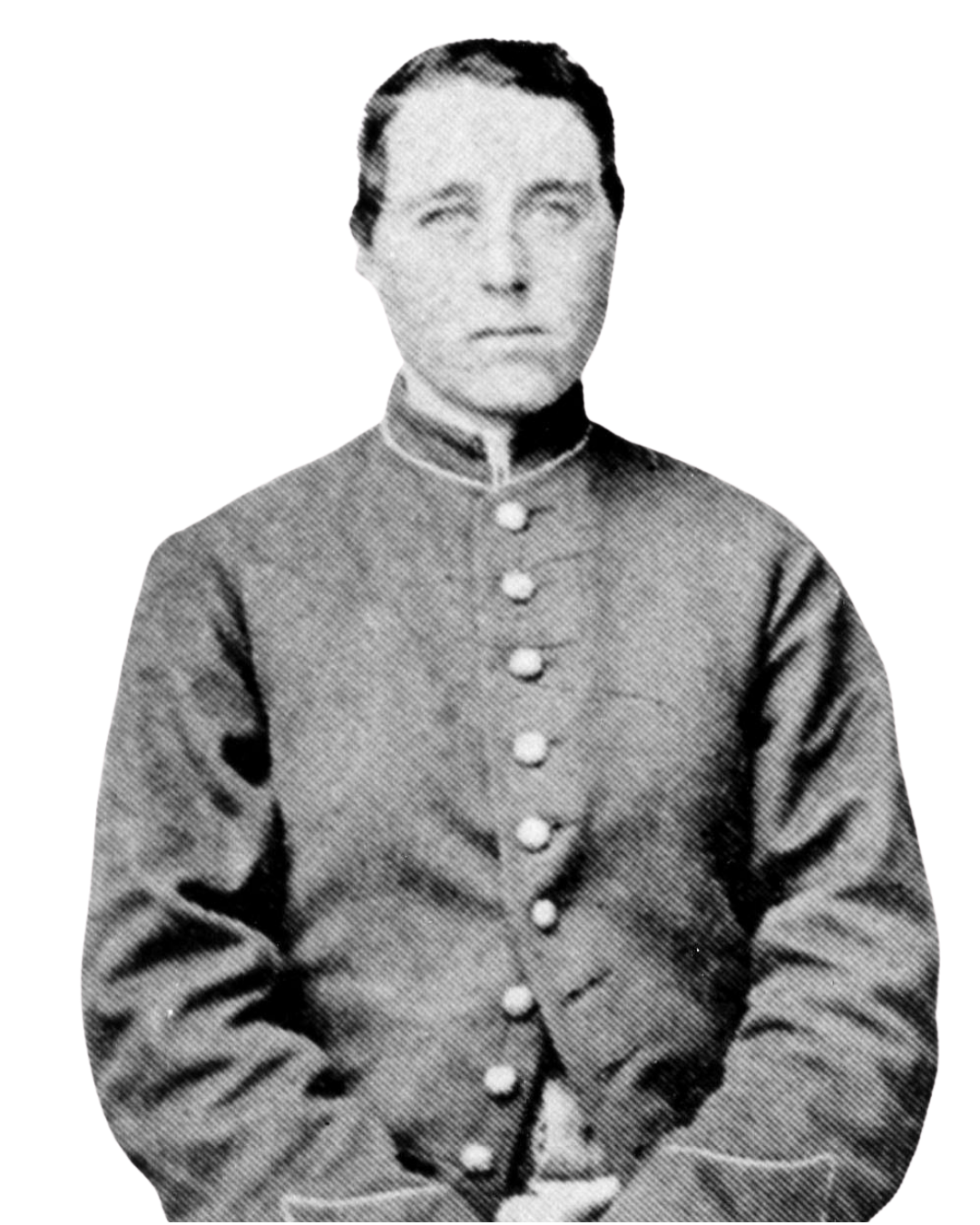
Albert Cashier
Union Army Soldier, Veteran, One of the Earliest Documented Trans Men in American History
Born
December 25, 1843, County Louth, Ireland, born as Jennie Hodgers
Identity
Transgender man; lived as a man for over 50 years
Known For
Service in the 95th Illinois Infantry through 40+ Civil War battles; living as a man from at least age 19 until death
Era
Civil War through early 20th century; his true identity became public knowledge only in 1911
Albert Cashier was born as Jennie Hodgers on Christmas Day, 1843, in County Louth, Ireland. As a teenager, he made his way to the United States, apparently as a stowaway, and took the name Albert D.J. Cashier. In 1862, at age 19, he enlisted in the 95th Illinois Infantry to fight for the Union. He was the shortest soldier in the regiment: 5 feet 3 inches tall, 110 pounds. He passed the physical examination without issue. He was given his uniform, his rifle, and his assignment.
No one suspected a thing. And for good reason: Albert Cashier was a soldier. He fought in over 40 battles and skirmishes across the theater of the Civil War, including Vicksburg, Nashville, and the Red River Campaign. He marched nearly 9,000 miles over three years of service. His comrades remembered him as brave and tough, with a gift for marksmanship. He was mustered out with his regiment in 1865 and returned to Illinois, where he spent decades living quietly in the small town of Saunemin, working odd jobs, collecting his veteran's pension, and being Albert Cashier.
His assigned sex at birth was only discovered in 1911, when an accident required a physical examination. Even then, many of his former comrades, old men by then, testified to his valor and his identity. He was buried in 1915 in his Union uniform. His headstone reads: Albert D. J. Cashier, Co. G, 95th Ill. Inf.
Who He Was
He fought in 40 battles for the Union. His identity stayed safe for 50 years.
He fought for a more free America. He deserves to be remembered in it.
Albert Cashier fought for the Union, for the preservation of the country and for the abolition of slavery. He did so as himself. His service was real. His sacrifice was real. His identity is real. Today, when trans people face legislative bans on service in the military, Cashier's story is a direct and irrefutable answer: trans people have always served. They have bled for this country. They are part of its foundation.
He is buried under his name, in his uniform, in the state he chose to call home. He asked for nothing except to be left alone to live his life. That is not a radical demand. It never was.
When Albert's identity became public late in his life, there were attempts to remove him from the soldiers' home where he lived, to force him into women's clothing, to strip away the name and the history he had built over 50 years. His former comrades pushed back. They wrote letters. They testified. They said he was their fellow soldier, their friend, and that nothing they had learned changed anything about the man they had known.
When the world tried to strip his identity from him, his brothers in arms said no.
What his comrades said
Albert Cashier lived his truth from at least age 19 until his death at 72. He didn't ask for permission.
He didn't explain himself. He simply was who he was, for over half a century.
There's always more beneath the surface. Find more stories.
07/10
Their existence was an act of resistance.

The story doesn’t end here. Join us for the more of our 250 Years of Resistance events