


“The president – no lie.”
— We'wha, after meeting President Grover Cleveland in Washington, D.C., 1886
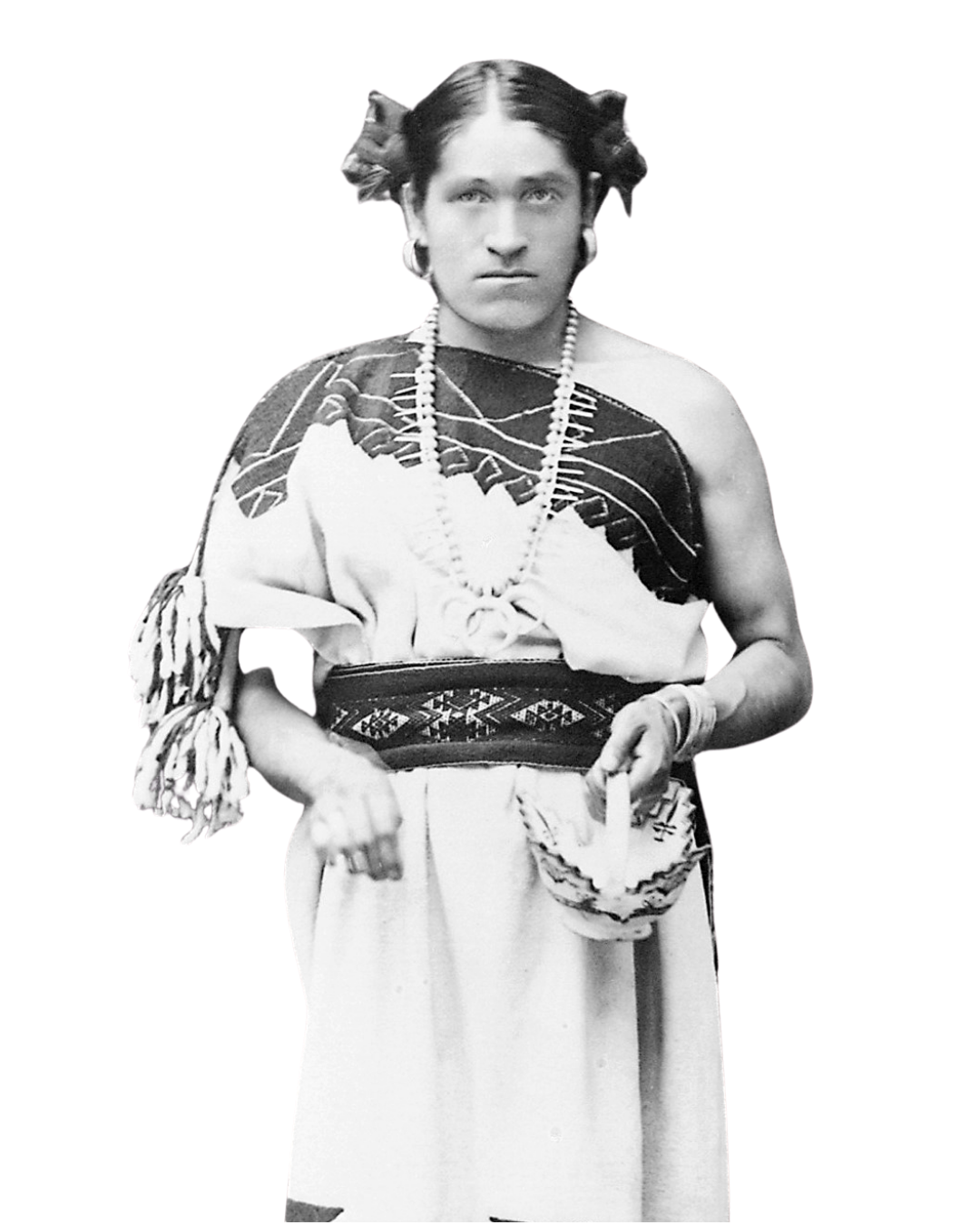
We’Wha
Zuni Lhamana, Master Weaver, Cultural Ambassador
Born
c. 1849, Zuni River Valley,
New Mexico
Identity
Lhamana, a Zuni person who embodies both male and female, now often described as Two-Spirit
Known For
Six-month stay in Washington D.C.; meeting President Cleveland; master weaving and ceramics at the Smithsonian
Era
Post-Civil War expansion era; height of Indigenous cultural suppression
We'wha was born in 1849 in the Zuni River Valley, in what is now New Mexico, into one of the most rich and enduring Indigenous cultures in North America. From early in life, they were recognized as a lhamana, a Zuni term for a person who holds both male and female qualities within them, moving between roles, gifted in areas that spanned both. In Zuni society, lhamana people were not marginalized. They were honored. They were considered spiritually significant, seen as bridges between the two genders and between the human and spiritual worlds.
We'wha became a master weaver and ceramicist, creating pieces significant enough to be included in the collection of the Smithsonian Institution. They were a spiritual leader, a teacher, and a keeper of Zuni knowledge. And in 1885, they became something no one in Washington had ever encountered: a Zuni cultural ambassador. We'wha traveled to the nation's capital, spent six months demonstrating weaving to packed audiences, attending high society events, and meeting with President Grover Cleveland personally. The American press was fascinated. Cleveland was reportedly charmed. He had no idea he was in the presence of a lhamana. We'wha returned home and simply noted: "The president — no lie."
They died in 1896 at roughly 47 years old, shortly after participating in the Zuni winter solstice Shalako ceremony. Their community called the loss a "calamity." An anthropologist who knew them wrote with grief of their passing.
Who They Were
They went to Washington. They met the president. He had no idea who he was really talking to.
Two-Spirit identity is ancient. The war against it is the thing that is new.
When politicians today argue that gender-expansive identities are modern, foreign, or experimental, We'wha's life is the answer. Lhamana identity is not a new concept — it is an ancient, honored tradition that was thriving on this continent centuries before European contact. It was colonialism that tried to erase it. That erasure was deliberate, systematic, and violent.
Reclaiming We'wha's story is an act of resistance and restoration. It honors the Zuni people's own traditions of recognition, and it insists that Indigenous Two-Spirit identity is part of the history of this land — not a footnote, but a foundation.
We'wha's visibility came at a precise historical moment. The U.S. government's assimilation campaigns, including boarding schools, forced relocation, and cultural destruction, were accelerating. They targeted not just language and land, but the very identities that Indigenous nations recognized and celebrated. Lhamana identity, along with other Two-Spirit traditions across hundreds of nations, was actively suppressed. By the 1920s, the tradition had been nearly wiped out in Zuni community life.
A culture that honored them, and the colonialism that tried to end it.
A Moment in Time
We'wha wove fabric on a traditional Zuni loom in the halls of Washington while senators and socialites watched. They were teaching. What they were teaching, the depth of Zuni civilization and the normalcy of their identity, most of the audience couldn't yet understand.
- Adapted from anthropological records of the 1886 Washington visit
Have you seen who else helped shape this country? Walk ahead.
02/10
Their existence was an act of resistance.

The story doesn’t end here. Join us for the more of our 250 Years of Resistance events