





They called her a monster.
She was just ahead of her time.
Mary Jones
One of the First Documented Black Trans Women in American History
Born
December 12, 1803, New York City, a free Black woman
Identity
Transgender woman; one of the first documented trans women in New York City history
Known For
Navigating life as a free Black trans woman in 1836 New York; subject of sensationalist press coverage; recognized by the Museum of the City of New York
Era
Antebellum New York: a city that was nominally free and violently hostile to Black lives
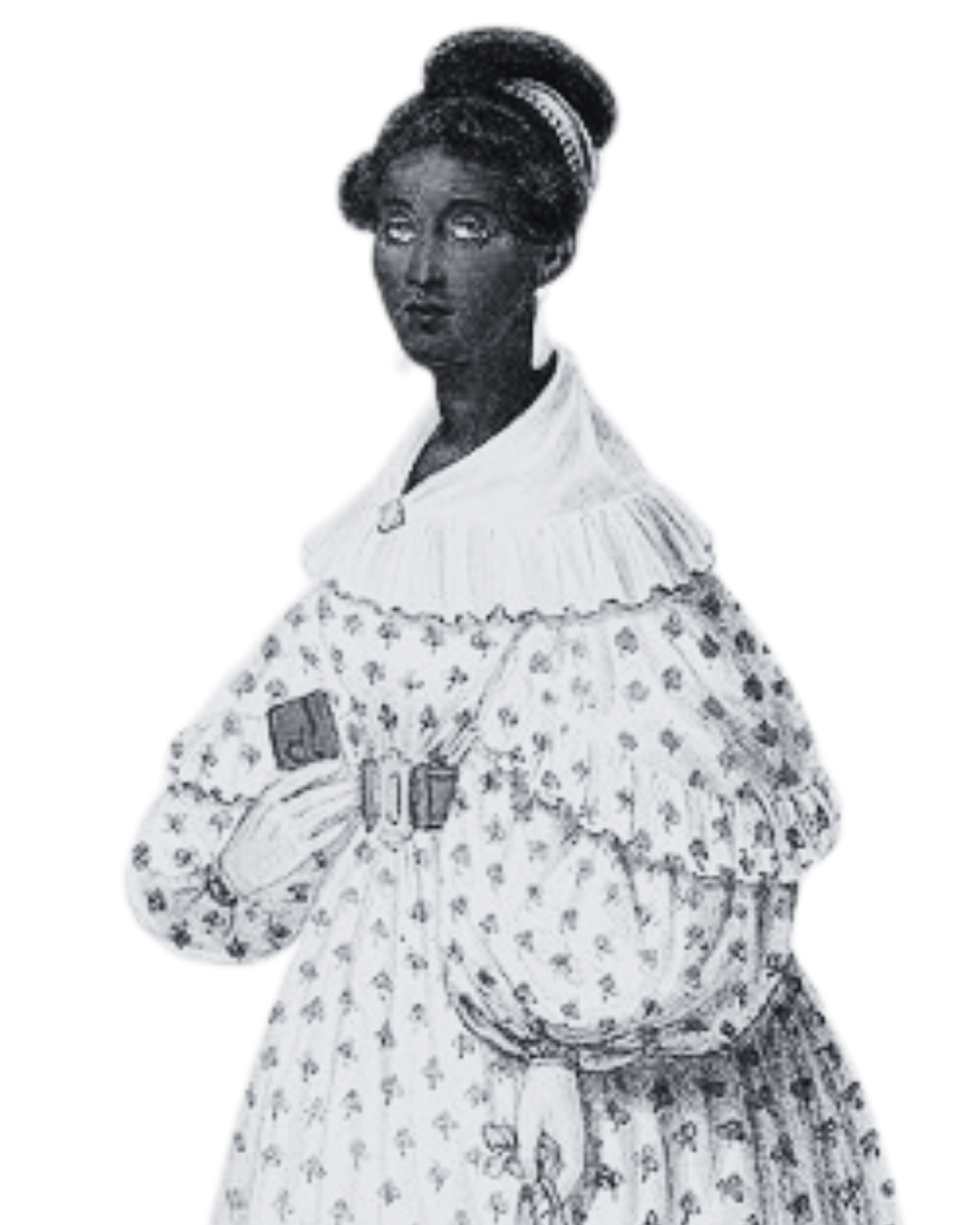
Mary Jones was born on December 12, 1803, a free Black woman in a city that was nominally free but deeply hostile to Black life, and entirely hostile to gender nonconformity. She worked as a domestic laborer. She also worked as a sex worker, navigating both roles with care and intention, moving through Black communities in New York and New Orleans where she lived fully as a woman. By all accounts, she was striking: elegant in her dress, confident in her presentation, and clearly herself.
In 1836, a white client reported the theft of his wallet and Mary was arrested. During the arrest, officers discovered she had been assigned male at birth. What happened next was a public spectacle. The sensationalist press exploded. A lithograph was published depicting her as a grotesque figure, captioned as a "Man-Monster." She was tried, sentenced to five years at Sing Sing prison, and became a subject of ridicule and horror in the popular press.
Mary Jones survived all of it. The Museum of the City of New York now recognizes her as one of the first known gender-variant people in the city's documented history. In 2019, Brooklyn Museum commissioned a short film about her life by the filmmaker and activist Tourmaline. Her story is being reclaimed, and it is magnificent.
Who She Was
Free, Black, and trans in 1836 New York City. She survived all three.
Black trans women have always been here. They have always paid the highest price.
Mary Jones' story exposes something that has been true for 200 years: Black trans women face a convergence of racism, transphobia, and economic marginalization that is unique and uniquely dangerous. Her life was a precursor to the lives of Marsha P. Johnson, Miss Major Griffin-Gracy, and every Black trans woman who has built movements and paid for it with their freedom, safety, or life.
This history walk honors Mary Jones because she deserves to be honored, fully, by name, in public, in a park, in a way that 1836 New York City absolutely refused to do. She was not a monster. She was a woman living her truth in one of the most hostile environments imaginable. Her existence was an act of extraordinary courage.
The 1836 press coverage of Mary Jones was designed to shock and shame, to present her as a deception, a danger, an aberration. What the coverage actually documented was a woman who had been living her full life in a city that offered her almost nothing. She was Black in a racist city. She was trans in a world without language for it. She was poor and doing what she had to do to survive. The fact that she was fabulous about it was apparently the most threatening thing of all.
They tried to make her into a cautionary tale. She was something else entirely.
What the press got wrong
Two hundred years before Black trans women became visible as leaders of the LGBTQIA+ movement, Mary Jones was already living that life in downtown New York. She had no movement behind her. She had only herself.
What else was left out? Explore to find out.
06/10
Their existence was an act of resistance.

The story doesn’t end here. Join us for the more of our 250 Years of Resistance events