





“They tried to change my road.”
— Osh-Tisch, on government attempts to force her to abandon her identity
Osh-Tisch
Crow Nation Badé, Warrior, Spiritual Leader
Born
c. 1854, Crow Territory, Montana
Identity
Badé: a Crow person assigned male at birth who lives as a woman; one of the last known badé of the Crow Nation
Known For
Bravery at the Battle of the Rosebud, 1876; her community's successful campaign to remove the federal agent who persecuted her; her artistry in beadwork and ceremony
Era
The height of federal assimilation campaigns; Indian Wars era
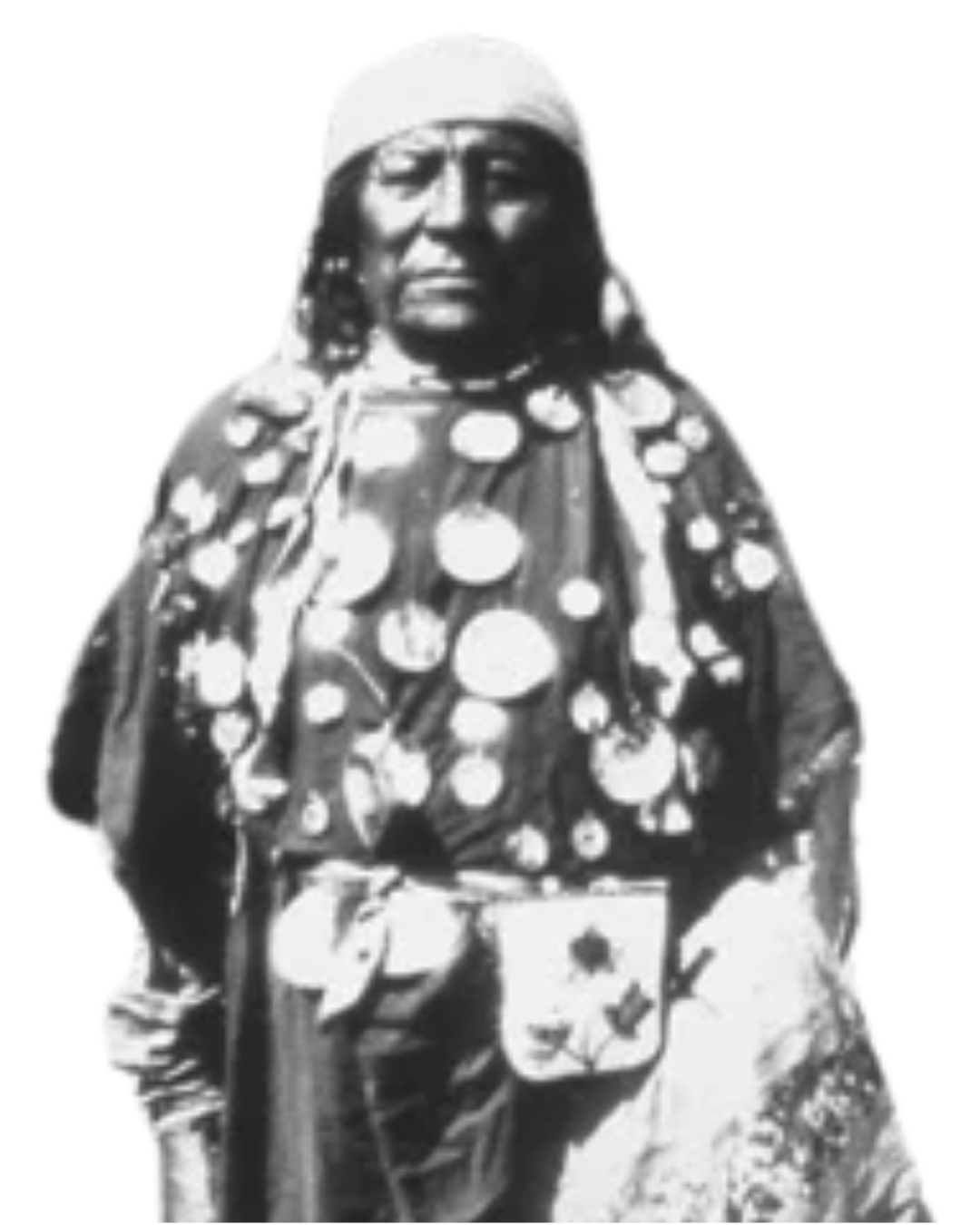
Osh-Tisch, whose name in the Crow language means "Finds Them and Kills Them," was born around 1854 in Crow Territory in what is now Montana. She was a badé: a Crow person assigned male at birth who lives as a woman, occupying a role that was recognized, honored, and spiritually significant in Crow culture. Badé people were valued for their artistry, their ceremonial knowledge, and their ability to move between the gendered worlds of Crow society. They were not marginal. They were central.
Osh-Tisch earned her name in 1876 at the Battle of the Rosebud, fighting alongside Crow warriors as scouts for General George Crook against Lakota and Cheyenne forces. During the battle, she rode into enemy fire to rescue a wounded warrior named Bull Snake, pulling him to safety and killing the Lakota warrior who had taken him down. Her courage that day was recorded by both Crow witnesses and American military observers. She was recognized as a warrior from that moment on.
She was also a master beadworker whose creations were sought after and celebrated. A spiritual leader whose ceremonial knowledge was irreplaceable. A keeper of Crow traditions. And in the late 1890s, she became the target of a federal agent who arrived on Crow territory intent on "civilizing" the people, which meant, among other things, forcing Osh-Tisch and other badé to dress as men, cut their hair, and abandon their identities.
Who She Was
Her name means Finds Them and Kills Them. She earned it.
Communities have fought this battle before, and communities can win.
When legislatures today try to erase trans and non-binary people from public life, from bathrooms, from classrooms, from healthcare, Osh-Tisch's story is both a warning and a promise. The campaign to erase gender-expansive people is not new. It has been waged before, by federal agents with institutional power and governmental backing. And communities have organized against it. And communities have won.
Osh-Tisch died in 1929. The badé tradition faded in the decades after her death, ground down by ongoing colonial pressure. But she herself was not erased. Her name, her story, and the story of her community's victory remain. She is here. She is with us. She always was.
What happened next is the part of Osh-Tisch's story that history rarely tells: her community fought for her. The Crow elders and community members were outraged by the federal agent's actions. They petitioned for his removal. They called what he was doing a "tragedy" and a violation of Crow nature and tradition. And they succeeded. The agent was removed from his post.
The Crow Nation stood up for her. And they won.
The Community Fought Back
Osh-Tisch's story is not just about one person's resilience. It is about a community that recognized the value of its gender-expansive members and organized to protect them. They won. The government lost.
Continue exploring the people who helped shape America.
08/10
Their existence was an act of resistance.

The story doesn’t end here. Join us for the more of our 250 Years of Resistance events