






“I honor no sex. I am wedded to my art.”
— Harriet Hosmer
Harriet Hosmer
Internationally Celebrated Sculptor, Queer Pioneer, Woman Who Refused Permission
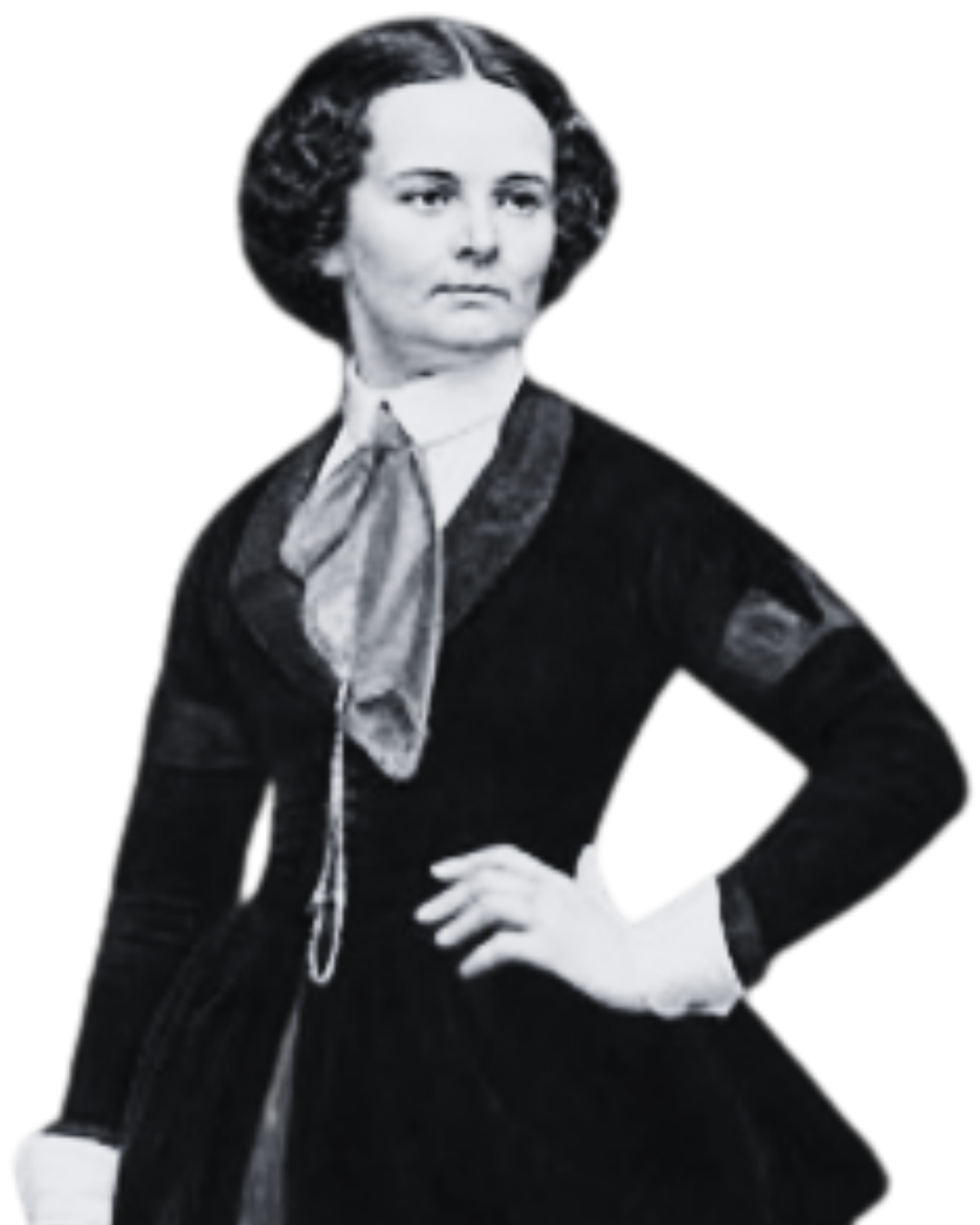
Born
October 9, 1830, Watertown, Massachusetts
Identity
Gender nonconforming; part of a vibrant queer women's community in 19th-century Rome; never married; formed deep passionate bonds with women
Known For
International sculpture career; works commissioned by presidents and European royalty; pioneering anatomy education for women; decades-long queer community in Rome
Era
Victorian America and Europe: an era of rigid gender roles that she ignored completely
Harriet Hosmer was born in 1830 in Watertown, Massachusetts, and became one of the most celebrated sculptors of the 19th century, a distinction that is astonishing given how aggressively the art establishment tried to keep women out. She studied anatomy at a time when every American medical school refused to admit women, eventually gaining access through a personal appeal to a university in Missouri. Then she moved to Rome at age 22, because Rome would give her what America wouldn't: studio space, professional mentorship, and freedom from the conventions that followed her everywhere at home.
In Rome, she built an international career. She was commissioned by American presidents, European royalty, and collectors across the Atlantic. Her sculptural style was celebrated for its technical mastery and its emotional complexity. Nathaniel Hawthorne, who visited her studio, wrote about her with a mixture of admiration and visible discomfort at how fully she refused to be the kind of woman he expected to find.
She never married. She wore her hair short, dressed practically, and moved through the world with a directness that her contemporaries found remarkable and occasionally alarming. She formed deep, passionate bonds with women, most centrally with the actress Charlotte Cushman, in what scholars now recognize as part of a rich and vibrant queer community among women artists in 19th-century Rome. Her circle was sometimes called "the jolly bachelors."
Who They Were
No American medical school would admit her. So she left the country and became world famous.
Queer women have always created. Harriet Hosmer built a cathedral.
Hosmer's story honors a tradition that is as old as queer history itself: the tradition of finding freedom in art, in craft, in creation. Queer women in the 19th century found each other in studios and salons, in exile from convention, in the shared recognition that the world as it was offered them almost nothing and they would have to build something better themselves. Harriet Hosmer built something better. And it is still standing.
Her story is part of FCSJ's mission because the freedom to create, to love, and to exist fully on your own terms is not a modern demand. It is a 200-year-old demand. It has always been worth fighting for.
Hosmer's sculpture was her contribution to the world. But her life, the choices she made about how to live it, who to love, what rules to follow and which to discard, was equally significant. She proved that a woman could have an international career, choose her loves freely, refuse domesticity, and succeed by any measure the world had to offer.
She built a life entirely on her own terms. That was itself a revolutionary act.
What SheBuilt
Hosmer's work included a sculpture of the sleeping Beatrice Cenci, a woman executed for killing her rapist father. The choice of subject says something about the artist. She was always paying attention to who had power and who didn't.
Keep going. History has more to say.
09/10
Their existence was an act of resistance.

The story doesn’t end here. Join us for the more of our 250 Years of Resistance events